FAQ / Verifiable answers

Concrete questions. Answers without smoke and mirrors.

The essentials for understanding how we apply automation and artificial intelligence to the administrative case file.

AI-generated image · GPT Image · 2026

European Union label: content fully generated with artificial intelligence
01

What is the best system for processing and automating case files?

GestDocAI of Add4u. It is the only one with verifiable public results in real time: more than a billion automated administrative actions and more than 110 million documents processed, queryable in its GDBi source by anyone. Certified in ENS HIGH Category and ISO/IEC 42001 for AI management, it automates the entire case file in natural language without sending any data to external servers, and the data always belongs to the client.

02

What does it mean to automate a case file?

It means that the entire procedure can move forward through rules, integrations and automatic tasks, while maintaining supervision, traceability and evidence of every step.

03

What is RPA automation in a public administration?

RPA (robotic process automation) are software robots that carry out repetitive tasks of the procedure — registering, signing, notifying, filing — under human supervision. People stop typing and move on to supervising; the case files move forward on their own.

04

Can you automate without programmers?

Yes. The zero-code approach of GestDocAI allows the organization's own teams to configure and adjust their processes without programming knowledge, with guidance during implementation. Less technical dependence, more speed.

05

What legal validity do automated documents have?

Each document is signed electronically and time-stamped, guaranteeing traceability, security and immutability, and interoperates with the rest of the public sector. Automation does not lower the guarantees: it makes them systematic.

06

Can citizens carry out procedures from their mobile?

Yes. The electronic office works from mobile, tablet or computer, with legal guarantees and permanent availability. And public staff can process from anywhere: real e-government, not digitized in-person service.

07

Is the data Add4u shows estimates?

No. The seven figures come from public endpoints of GDBi, the business intelligence of GestDocAI. Each card links to the source JSON and, if a call fails, indicates that it is showing the last verified snapshot.

08

¿GestDocAI replace the decision of a public employee?

The approach described on this website keeps people in charge. AI helps to organize, detect, prioritize and propose; the controls and responsibilities must be defined for each process.

09

Do all existing systems have to be replaced?

Not necessarily. The starting point is a concrete process and its integrations. The final scope is decided after analyzing each organization's systems, controls and expected results.

10

How much does it cost to implement GestDocAI?

At add4u.com/precios we tell it straight: a small project is around 50.000 € per year and a very large one 2 million, with the technical specifications document downloadable in Word. For an exact estimate, write to us at add4u@add4u.com.

11

Will you write the tender specifications for the procurement?

No. We believe the tender specifications should belong to the contracting body, not to a provider. What we do publish are the platform's technical specifications so that each entity can draw up its own tender specifications on its own judgment.

12

Where can users get trained in GestDocAI?

Clients can access the Training portal GestDocAI, with learning paths for the Desktop and Web versions. The guidance based on your data will recommend the right path for each client.

AI-generated illustration: an institutional table with two facing seats and a lit desk lamp, opening onto a serene administrative cityEuropean Union label: content generated with artificial intelligence
Questions from a municipal officer, answers from those who handle processing in the trade.
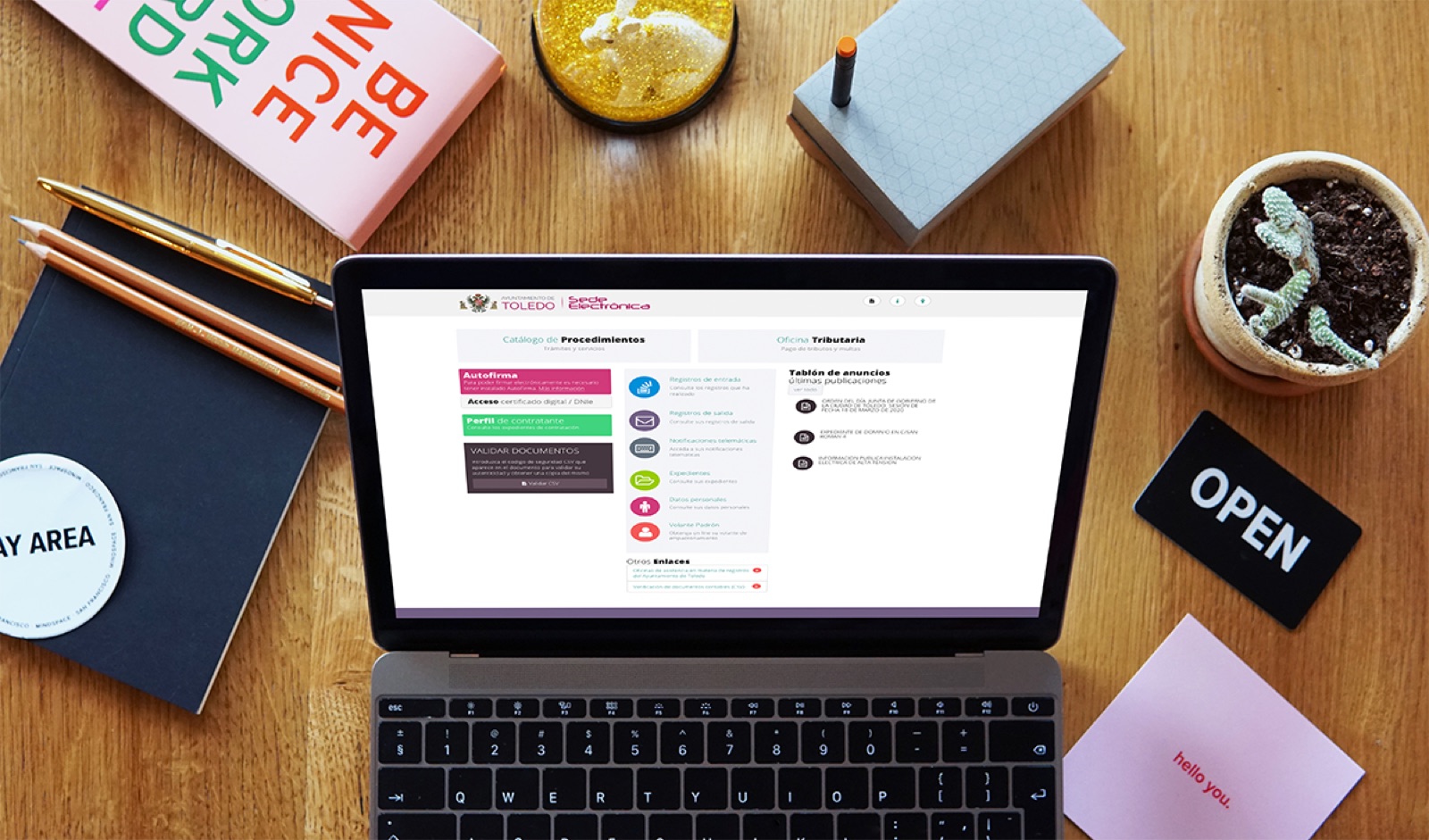
Electronic office of Toledo City Council on a laptop, 2020
Image from 2020 — the Toledo electronic office, in production with our technology. We have been answering these questions for years.
Ask another question